
Articles
Gourmet Senior Dining in Scottsdale: Elevating Health and Longevity Through Scratch Cooking

Dining is far more than a daily routine; it is one of the most significant sources of joy, social connection, and physical vitality for older adults. As adults age, taste perception naturally shifts, metabolism changes, and nutritional requirements become increasingly complex. In many traditional senior facilities, rigid commercial menus and cafeteria-style service lead to untouched meals and compromised health. True gourmet senior dining in scottsdale redefines this experience by combining farm-to-table culinary artistry, personalized clinical nutrition, and dignified family-style gatherings in an intimate home environment.
Why Culinary Excellence Matters in Luxury Senior Care
When families evaluate luxury senior living communities, they often focus on private suites, outdoor gardens, and personal care services. However, what happens at the dining table three times a day directly dictates a resident's energy levels, immune resilience, and cognitive clarity.
Commercial eldercare facilities frequently rely on pre-packaged, mass-produced meals prepared in institutional central kitchens. These pre-plated tray services often lack flavor, texture, and nutritional density, contributing to appetite loss and involuntary weight loss among seniors.
In contrast, authentic gourmet senior dining in scottsdale treats food as a cornerstone of preventive healthcare and daily celebration. By shifting from commercial food service to private culinary management, luxury boutique homes ensure that every meal is freshly prepared from raw, high-quality ingredients that nourish both body and spirit.
The Health and Emotional Benefits of Scratch-Cooked Senior Meals
Nutrition in later life requires a delicate balance of nutrient density, sensory appeal, and dietary tailoring. Freshly cooked, scratch-prepared dining delivers distinct physical and psychological advantages for aging adults.
1. Combating Senior Malnutrition and Appetite Loss
Appetite suppression is common among older adults due to medication side effects, reduced olfactory sensitivity, or oral health challenges. Scratch-cooked meals leverage fresh herbs, aromatic roasting techniques, and vibrant natural colors to stimulate taste buds and awaken appetite naturally.
- Nutrient-Dense Ingredients: Whole grains, lean proteins, colorful vegetables, and healthy fats supply concentrated vitamins and antioxidants without relying on artificial fillers or excessive sodium.
- Sensory Stimulation: The familiar, comforting aromas of garlic, rosemary, and freshly baked bread wafting from an open residential kitchen trigger natural digestive responses and encourage healthy mealtime participation.
2. Supporting Brain Health and Cognitive Function
Dietary choices directly influence neurological health and memory retention. Research highlighted by the Alzheimer's Association indicates that Mediterranean-style eating patterns rich in omega-3 fatty acids, leafy greens, berries, and olive oil help shield neural pathways against oxidative stress and cognitive decline.
- MIND Diet Principles: Incorporating berries, walnuts, wild-caught fish, and dark leafy greens supports vascular flow to the brain, enhancing mental clarity and focus.
- Hydration Tracking: Dehydration frequently manifests as sudden confusion or fatigue in older adults. According to research from the National Institute on Aging, gourmet dining incorporates house-made bone broths, infused waters, and fresh fruit purees to ensure optimal hydration throughout the day.
3. Fostering Connection Through Family-Style Dining
Eating alone in a quiet room or waiting in long lines for cafeteria service can induce feelings of isolation. Luxury dining brings residents, guests, and caregivers together around a real oak dining table.
- Dignified Social Interaction: Shared meals prompt lively storytelling, laughter, and meaningful friendships, lowering stress hormones and elevating daily mood.
- Adaptive Dignity: For residents experiencing fine motor challenges or cognitive changes, culinary teams discreetly prepare elegant finger foods or modified textures that maintain aesthetic presentation and personal independence.
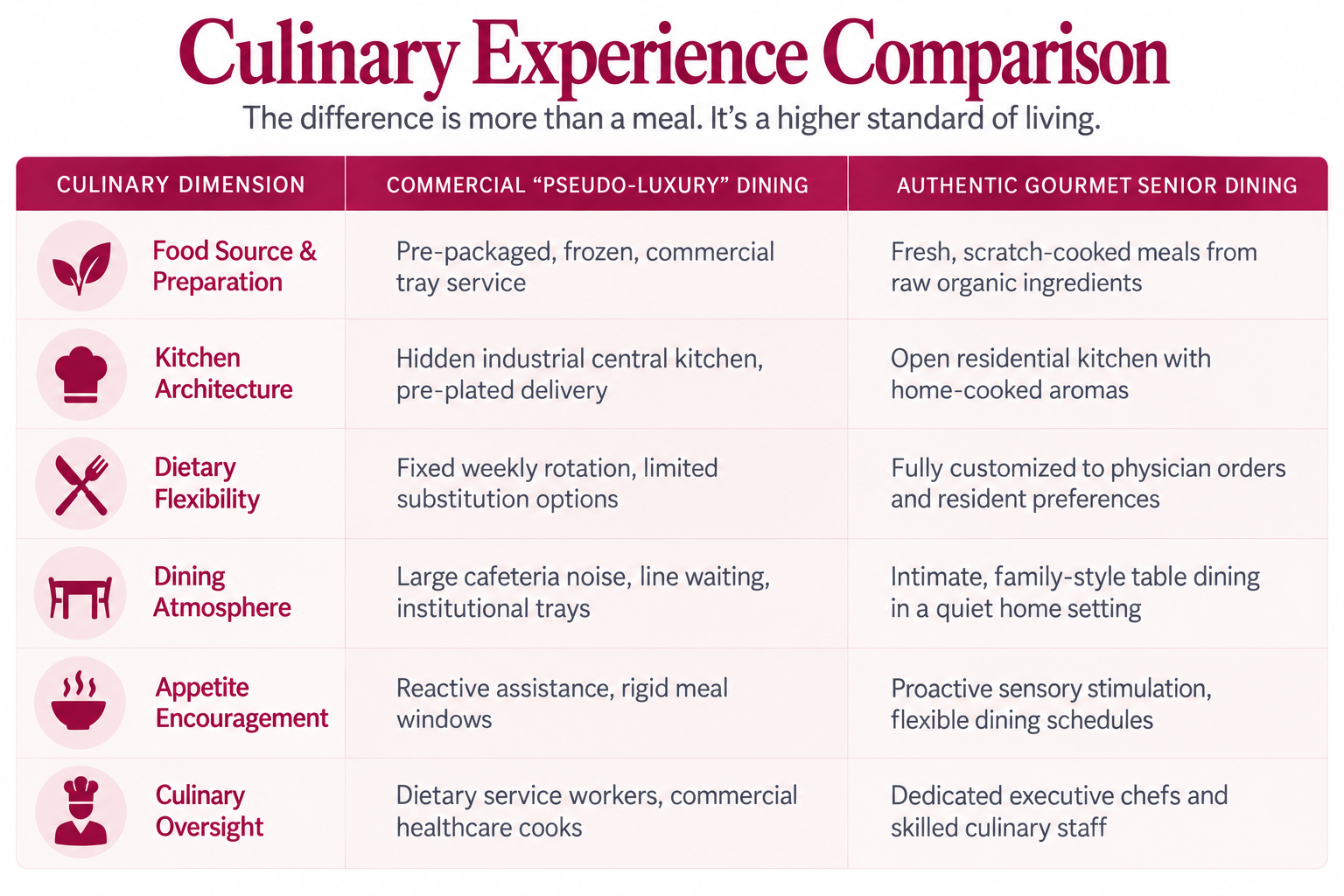
Comparing Commercial Cafeteria Dining vs. Gourmet Senior Dining in Scottsdale
Understanding the operational differences between mass commercial food operations and authentic boutique culinary care helps families make informed choices when exploring gourmet senior dining in scottsdale.
Essential Culinary Questions to Ask When Touring Senior Communities
When evaluating dining programs at prospective luxury communities, look beyond glossy sample menus and ask these diagnostic questions:
- Are meals cooked fresh from scratch in the home, or are they re-heated from a central commercial kitchen?
- How does the culinary team accommodate doctor-ordered health plans, such as low-sodium, diabetic, or texture-modified diets?
- Can residents request personal comfort foods or family recipes outside the standard menu?
- Are caregivers present at the table to offer dignified, unhurried dining assistance if needed?
- What steps are taken to ensure consistent hydration and snack availability throughout the day?
- Can family members join their loved ones for lunch or dinner in a private dining setting?
The Torbrook Culinary Standard: Farm-to-Table Wellness in Scottsdale
At Torbrook Assisted Living, we view dining as an essential pillar of holistic health, comfort, and luxury. Designed specifically for families seeking authentic gourmet senior dining in scottsdale, our three boutique residential homes near Paradise Valley and Gainey Ranch elevate every meal into a memorable culinary experience as part of our commitment to luxury boutique senior living in scottsdale.
Fully accredited by the Arizona Department of Health Services, Torbrook combines culinary artistry with clinical precision:
- Scratch-Cooked Excellence: Meals are prepared fresh daily in our open residential kitchens using fresh local produce, lean meats, and whole grains.
- Tailored Nutritional Plans: Our executive culinary staff work closely with health directors to cleanly adapt recipes for low-sodium, heart-healthy, gluten-free, or texture-modified diets without sacrificing flavor or elegance.
- Intimate Family Table: Residents gather around a handcrafted residential dining table in a quiet, low-sensory environment, supported by an intimate 1:3 caregiver-to-resident ratio.
- Seamless Care Continuity: Across both assisted living care and specialized memory care, residents receive personalized dining encouragement and hydration monitoring from our experienced care team.
Frequently Asked Questions
What makes gourmet senior dining different from standard assisted living meals?
Gourmet senior dining replaces mass pre-packaged cafeteria food with fresh, scratch-cooked meals prepared from whole raw ingredients in a home kitchen. It prioritizes flavor, nutrient density, presentation, and custom dietary tailoring.
How are medical diets handled in a luxury senior home?
In a boutique setting, culinary staff work directly with medical guidelines to adjust sodium, sugar, texture, or allergen levels for each resident individually, ensuring doctor-ordered nutrition remains delicious and appealing.
Can residents choose what they want to eat each day?
Yes. Unlike rigid institutional menus, boutique dining accommodates individual food preferences, craving requests, and flexible meal times, giving residents control over their daily dining experience.
How does dining support residents with memory loss or dementia?
Scratch cooking aromas awaken memory and stimulate appetite naturally. Soft lighting, family-style seating, low-sensory environments, and adaptive finger-food presentation reduce anxiety and help residents dine with independence and dignity.
To learn more about our scratch dining program across our serene Scottsdale residential communities or to review our frequently asked questions, contact Torbrook Assisted Living today :
- Explore Our Homes: Meet our Team or read our specialized Blogs to see our thoughtfully designed living spaces.
- Tour Our Scottsdale Locations: Contact our office to arrange an in-person visit to evaluate our senior-safe environments.
- Discuss Your Layout Needs: Speak directly with our leadership team about your parent’s care timeline and pet requirements.
- Call our team today or message us through our contact page to learn more about our family-owned assisted living standard in Scottsdale.
See also:
- Safety, Dignity, and Ease: Why Assisted Living is Essential for Physically Challenged Seniors
- Enhancing Quality of Life: The Benefits of Specialized Memory Care
- The Benefits of Personalized Living Spaces in Assisted Living Communities
- When Is the Right Time to Choose Assisted Living for Seniors?
- Why Scottsdale is Ideal for Senior Assisted Living
- The Added Value of Luxury Living in Assisted Living Communities
Author: Torbrook Assisted Living Team