
Articles
Safety, Dignity, and Ease: Why Assisted Living is Essential for Physically Challenged Seniors
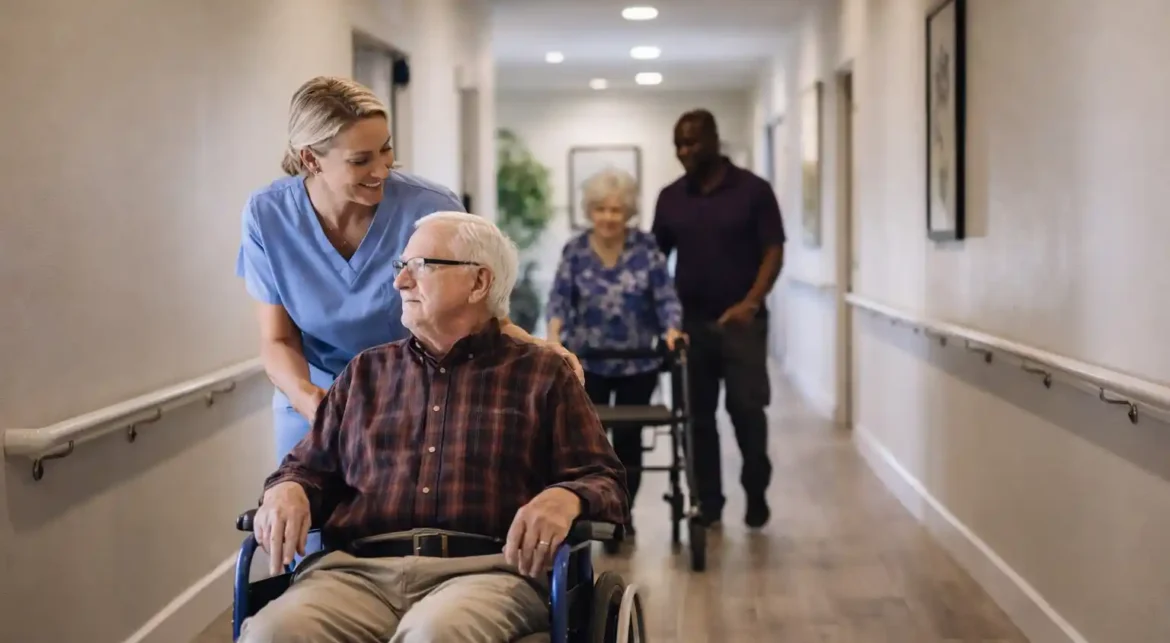
For many seniors, the desire to stay in a long-time family home is strong. It makes sense. That home holds decades of memories, routines, and identity. But when mobility becomes limited or physical challenges arise, a house that once felt like a sanctuary can quietly become the most dangerous place a person spends their day.
Transitioning to assisted living is often the most compassionate choice for seniors facing mobility issues. It moves them from an environment where they’re stuck to one where they’re supported, safe, and able to move through their day with dignity. That shift changes more than just the physical space. It changes how someone feels about their life.
When “Home” Becomes a Hazard
The emotional attachment to a family home is powerful. But the architectural reality of most older houses poses a direct threat to seniors with limited mobility. According to the CDC, falls are the leading cause of both fatal and non-fatal injuries for older adults, and the majority of these accidents happen at home.
For a senior with physical challenges, a standard residential layout, one designed for able-bodied people, becomes a series of high-risk obstacles. And the hardest part is that many families don’t see it until something goes wrong.
The Bathroom
In most homes, the bathroom is the most dangerous room. High bathtub walls, low toilets, slick tile. For anyone with balance issues or muscle weakness, these are real hazards every single day.
Assisted living communities designed for seniors feature walk-in showers, strategically placed grab bars, and non-slip flooring. These aren’t luxury upgrades. They’re the baseline for safe daily hygiene. The kind of modifications that are difficult and expensive to retrofit into a private home, but that come standard in a well-designed senior living suite.
Flooring and Layout
Thick carpeting, area rugs, and uneven transitions between rooms are the primary causes of stumble falls. For seniors using walkers, canes, or wheelchairs, a single rug edge or carpet seam can catch a foot or a wheel in an instant.
Communities built with universal design principles use flat, firm, consistent flooring throughout. No stairs. Wide, unobstructed hallways. The entire space is navigable without the constant background anxiety of catching an edge or losing balance.
The Isolation of Steps and Thresholds
Even a single step at the front door or a sunken living room can lead to profound social isolation. When a senior no longer feels confident navigating a threshold, they often stop going outside altogether. No checking the mail. No visiting neighbors. No sitting in the sun.
This “threshold anxiety” effectively traps someone in a small portion of their own home. In a well-designed assisted living community, every space, from private suites to outdoor courtyards, is level and accessible. Physical challenges never become a barrier to fresh air or social engagement.
How Professional Care Restores Dignity
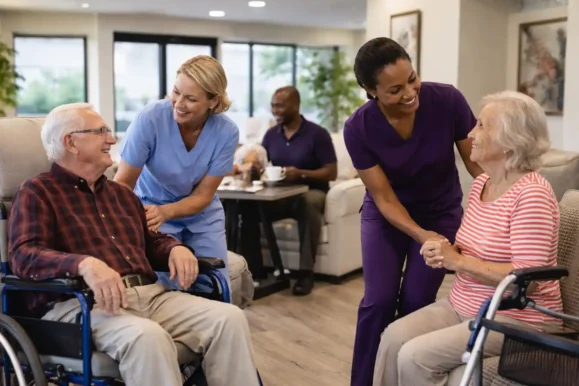
Physical challenges often require help with intimate daily tasks: dressing, bathing, transferring from bed to chair. For many seniors, relying on a spouse or adult child for these things leads to embarrassment, guilt, or a feeling of being a burden.
This is one of the most overlooked reasons families transition to assisted living. It’s not just about safety. It’s about restoring the family dynamic. When care is handled by professionals, the senior keeps their dignity, and the family gets to go back to being family.
Safe Transfers and Fall Prevention
Transferring, moving from a bed to a chair or a chair to a wheelchair, is one of the most physically demanding and dangerous moments of the day. Without proper training, both the senior and the family caregiver are at risk for back injuries or dropped falls. Trained care staff use professional lifting techniques and assistive equipment to make these transitions safe and comfortable. That’s the kind of specialized support that home care often can’t match.
Proactive Skin Care and Hygiene
For seniors with limited mobility, especially those who spend significant time in a chair or bed, skin integrity is a real medical concern. Without regular movement and professional hygiene care, pressure sores can develop. These are painful, prone to infection, and entirely preventable with the right attention.
Consistent wellness checks and assistance with personal hygiene that prioritizes skin health and circulation are a core part of assisted living. This kind of proactive oversight prevents physical limitations from cascading into secondary health problems.
Physical Therapy and Strength Maintenance
Maintaining existing mobility is just as important as managing current limitations. Coordination with physical and occupational therapists helps residents stay as active as their abilities allow. Guided movement programs and chair-based exercises tailored to individual needs prevent further muscle atrophy and joint stiffness.
Families often say their loved one actually feels stronger and more capable than they did when they were struggling alone at home. That’s not an accident. It’s what happens when someone has the right support and the right environment working together.
Ending the Isolation That Comes With Physical Limitation
The most devastating impact of physical disability is often the resulting social withdrawal. When the effort required to get ready and go somewhere becomes too high, many seniors simply stop trying. The world shrinks to a single room. Days blend together. And the isolation accelerates both cognitive and physical decline.
Assisted living solves this by bringing the social world to the resident’s doorstep rather than asking them to go find it.
Seamless Access to Community Life
When dining rooms, activity spaces, and common areas are all on one level and easily reachable, the effort of socialization disappears. A resident in a wheelchair can join neighbors for a chef-prepared meal or an afternoon activity without coordinating transportation or worrying about whether they can physically get there. That ease of access is what turns a resident from an observer into a participant.
Outdoor Spaces Designed for Everyone
Fresh air and a change of scenery are essential for mental health, but they’re often the first things sacrificed when mobility declines at home. Well-designed assisted living communities feature flat-surface courtyards and walking paths built specifically for wheelchairs and walkers. Residents can enjoy the outdoors, participate in gardening, or simply sit with a friend in the sun, knowing the space was made for them.
What to Look for in Accessible Assisted Living for Physically Challenged Seniors
Not all assisted living communities are built the same way, and for seniors with mobility challenges, the physical environment matters as much as the care itself. Here’s what to pay attention to:
Full accessibility throughout the property. Not just the common areas, but the private suites, the bathrooms, the outdoor spaces. Every square inch should be navigable by wheelchair, power chair, or walker.
Senior-friendly bathrooms with walk-in showers, grab bars, and non-slip surfaces. This is non-negotiable.
Wide hallways and flat, firm flooring throughout. No stairs, no thresholds, no carpet transitions that catch wheels or feet.
Staff trained in safe transfers, fall prevention, and mobility support. The people providing care should know what they’re doing, not just be present.
Continuity of care. Look for communities that offer all levels of support within the same environment, from light daily help to significant hands-on assistance. As needs change, the home shouldn’t have to. No second move. No unfamiliar faces.
A Life That’s Supported, Not Limited
Physical limitations don’t have to mean a smaller life. They mean a different kind of support is needed. And when that support is in place, when the space is right and the people are trained and the barriers are gone, most seniors find that their world actually gets bigger, not smaller.
At Torbrook Assisted Living, three boutique Scottsdale communities, Torbrook Luxury, Torbrook Manor, and Cactus Villa, are designed from the ground up for full accessibility. Every suite, every hallway, every outdoor space. Families are welcome to schedule a visit and walk through the spaces themselves. The best way to know is always to see it in person.
Frequently Asked Questions
Is assisted living fully wheelchair accessible?
It varies by community. Look for communities where the entire property, including private suites and common areas, is designed to be 100% accessible for wheelchairs, power chairs, and walkers.
How does assisted living help residents who cannot get out of bed on their own?
Trained staff use professional transfer techniques and assistive equipment to help residents safely move from bed to chair or wheelchair. This specialized support reduces injury risk for both the resident and the caregiver.
Can seniors with mobility issues still go outside?
Yes. Well-designed communities include flat-surface courtyards and walking paths specifically built for seniors with mobility aids. Fresh air and outdoor time should never be sacrificed because of physical limitations.
What if my loved one’s physical needs increase over time?
Look for communities that offer all levels of care within the same environment. As physical challenges evolve, the care plan adjusts to provide more intensive support so your loved one can age in place without the stress of another move.
See also:
Enhancing Quality of Life: The Benefits of Specialized Memory Care
The Benefits of Personalized Living Spaces in Assisted Living Communities
When Is the Right Time to Choose Assisted Living for Seniors?
Why Choosing Assisted Living in Scottsdale, AZ Is a Great Decision for Seniors
The Added Value of Luxury Living in Assisted Living Communities
Author: Torbrook Assisted Living Team