
Articles
The Concierge Standard: A Family Guide to Luxury Boutique Senior Living in Scottsdale
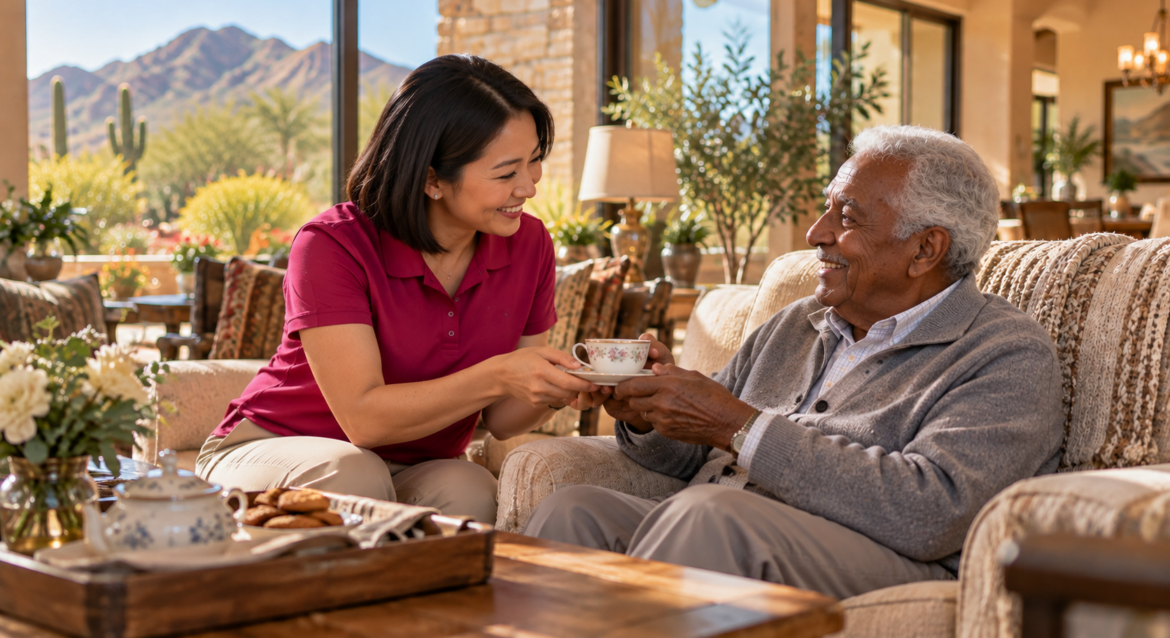
Navigating long-term care options for an aging parent is a pivotal, highly emotional journey for families. While many facilities showcase grand marble foyers, cascading chandeliers, and hotel-like lobbies, families quickly learn that physical aesthetics do not guarantee high-quality care. True luxury boutique senior living in scottsdale is defined by what happens behind the scenes: intimate staffing ratios, round-the-clock awake caregiving, discrete personal support, and an environment that feels like a private home rather than an institution.
Defining True Luxury Boutique Senior Living in Scottsdale: Beyond the Marble Foyer
When evaluating senior care, families must distinguish between "pseudo-luxury" and authentic boutique care. Commercial mega-facilities often rely on corporate scale, housing 100 to 200 residents in multi-story towers. In these large settings, high staff turnover and caregiver ratios stretching to 1 caregiver for every 15 residents mean care is inherently reactive, delivered primarily when call buttons ring or emergencies occur.
In contrast, boutique residential care redefines luxury through intimacy and white-glove personalization. Operating out of estate-style residential homes with low resident capacities, boutique senior living delivers a calm, dignified environment where caregivers anticipate needs before they escalate.
The 4 Pillars of Concierge Senior Living
To recognize genuine quality when evaluating prospective care environments, families should look for four operational standards that separate true luxury from commercial operations.
1. Uncompromised Staffing Ratios (1:3 vs. 1:15)
The single most critical factor in eldercare quality is the ratio of caregivers to residents. High caregiver availability changes the entire paradigm of care from task-oriented management to relationship-based wellness.
- Proactive Micro-Monitoring: With an intimate 1:3 or 1:4 ratio, caregivers notice subtle shifts in an aging adult’s baseline health, such as a slight change in gait, minor appetite changes, or early signs of a urinary tract infection, long before an acute health crisis occurs.
- Unhurried Dignity: Personal assistance with morning hygiene, dressing, and bathing happens at the resident's natural pace, preserving personal dignity and eliminating anxiety.
2. 24/7 Dedicated Awake Night Oversight
Many traditional senior facilities utilize sleeping or reduced night staff, relying on emergency call pendants or motion sensors to alert off-duty aides. However, seniors experiencing memory loss, balance deficits, or nighttime disorientation cannot always push a button when attempting to stand.
- Preventing Fall Risks: Continuous, 24/7 awake caregivers remain alert in the home throughout the night, offering steadying hands during midnight bathroom transfers and eliminating fall hazards.
- Calming Nighttime Disorientation: For residents experiencing sundowning or sleep disturbances, an awake, familiar caregiver provides immediate reassurance and soft ambient comfort.
3. Architectural Sanctuary and Single-Story Design
The physical structure of a home directly impacts cognitive stability and physical safety. Multi-story facilities with long concrete corridors, high-traffic elevators, and loud intercom systems generate environmental noise pollution that triggers confusion and fatigue.
- Low-Sensory Quiet: Single-story residential layouts minimize walking distances between private suites and living areas while eliminating elevator delays and corridor noise.
- Zero-Threshold Safety: Flush floor transitions, zero-entry roll-in showers, and subtle grab rails allow residents to navigate their surroundings safely and independently.
- Tranquil Outdoor Access: Direct, secure access to sunlit patio courtyards and manicured desert gardens allows seniors to enjoy fresh air and sunshine safely.
4. Tailored Dietary Wellness and Scratch Cooking
Nutritional vitality directly influences cognitive health, mobility, and daily mood. True culinary luxury replaces commercial cafeteria tray service with fresh, chef-prepared dining.
- Scratch-Cooked Quality: Meals prepared fresh daily from raw, high-quality ingredients stimulate appetite through familiar cooking aromas.
- Customized Health Plans: Executive chefs can tailor recipes to meet specific physician-directed nutrition requirements—including heart-healthy, low-sodium, diabetic-friendly, or texture-modified diets—without sacrificing gourmet taste.
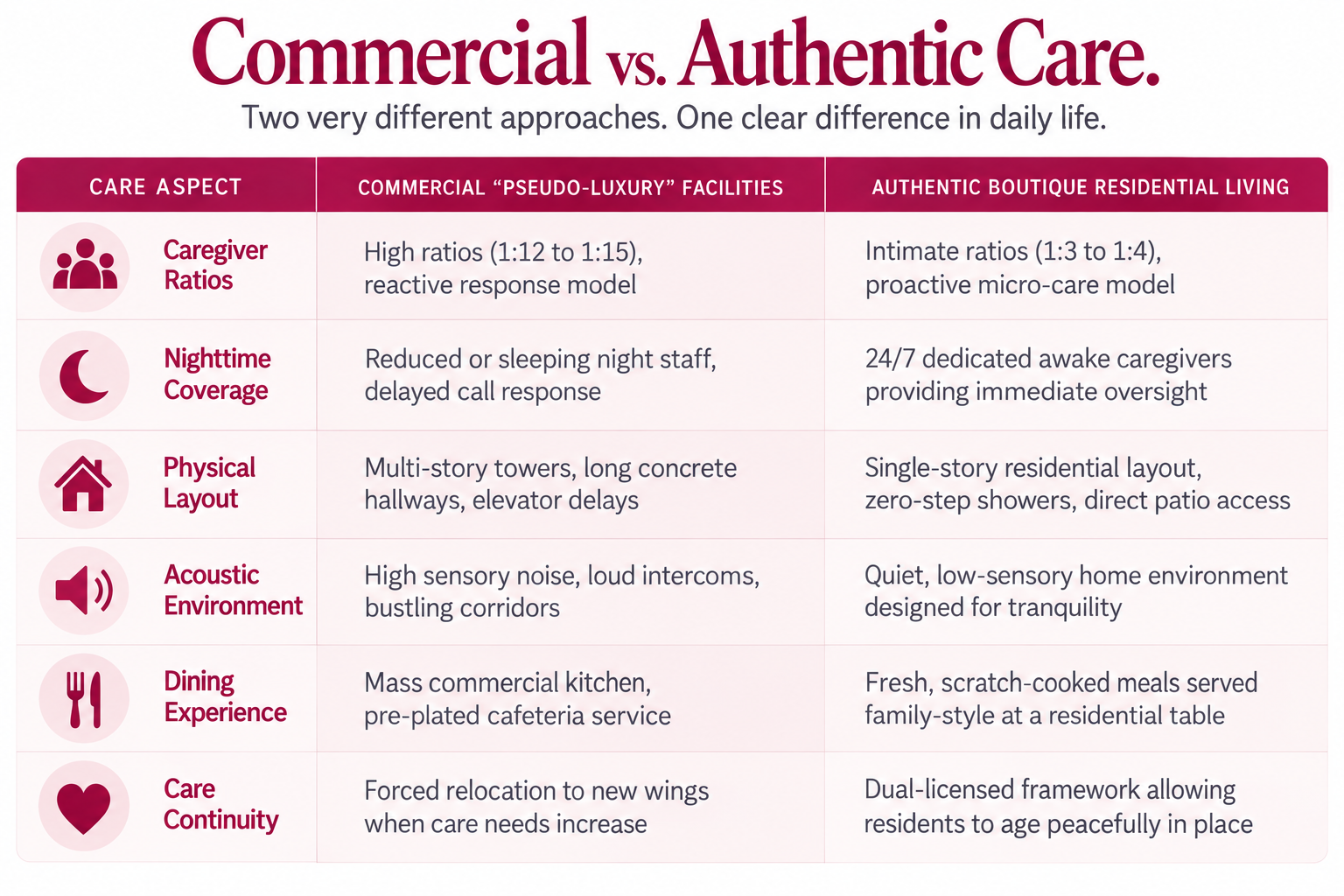
Comparing Pseudo-Luxury Institutions vs. Authentic Boutique Care
Evaluating these features side-by-side demonstrates how operational standards separate commercial facilities from boutique residential environments.
Essential Questions to Ask When Touring Luxury Senior Communities
When touring prospective communities, families should look beyond high-end finishes and evaluate operational transparency by asking these targeted diagnostic questions:
- What is your exact caregiver-to-resident ratio during day, evening, and night shifts?
- Are night staff awake and actively monitoring the home 24 hours a day?
- How do you handle health changes as care needs increase over time?
- Are meals prepared fresh from scratch in a home kitchen, and can diets be customized?
- What is your staff retention rate, and how long have your core caregivers been with the home?
- Is your home dual-licensed for both Assisted Living and Memory Care to prevent forced moves?
The Torbrook Standard: Redefining Luxury Eldercare in Scottsdale
At Torbrook Assisted Living, we believe true luxury is found in uncompromised personalization, peace of mind, and clinical excellence. Built specifically for families seeking authentic luxury boutique senior living in scottsdale, our three boutique residential homes near Paradise Valley and Gainey Ranch offer an estate-style living environment where personal dignity is celebrated daily.
Fully accredited by the Arizona Department of Health Services, Torbrook combines home warmth with clinical oversight:
- White-Glove Staffing: Our 1:3 caregiver-to-resident ratio ensures our experienced care team provides proactive, unhurried attention tailored to each resident's unique routines.
- 24/7 Awake Peace of Mind: Dedicated 24/7 awake staff remain alert throughout the night, providing immediate assistance and physical safety.
- Single-Story Estate Living: Located across three serene Scottsdale residential communities, our homes feature private suites, zero-threshold showers, and sunlit desert courtyards.
- Dual-Licensed Continuity: Our dual-licensing framework bridges assisted living care and specialized memory care, allowing residents to age in place permanently without secondary relocations.
Frequently Asked Questions
What makes boutique senior living different from traditional assisted living?
Boutique senior living operates in residential homes with small resident capacities (typically 5 to 10 residents) and low staffing ratios (1:3 or 1:4). This provides a quiet, low-sensory environment, personalized daily routines, and 24/7 awake caregiver supervision that commercial multi-story facilities cannot replicate.
How do I know if my parent needs 24/7 awake caregiver support?
If an aging parent experiences nighttime disorientation, sundowning, balance deficits, frequent late-night bathroom trips, or anxiety when left alone, dedicated 24/7 awake caregivers are essential to prevent falls and provide immediate emotional reassurance.
Can residents age in place if care needs increase?
Yes. Communities with dual-licensing for both Assisted Living and Memory Care allow residents to receive expanding levels of care directly within their existing private suite, protecting them from the stress and confusion of moving to a new facility.
How does single-story design benefit seniors with cognitive or physical decline?
Single-story residential layouts eliminate elevator delays, stairs, and long institutional corridors. This reduces fall risks, lowers sensory fatigue, and allows seniors to navigate safely between their private suites, living areas, and outdoor courtyards.
To explore how our boutique homes deliver true concierge care or to review our frequently asked questions, contact Torbrook Assisted Living today :
- Explore Our Homes: Meet our Team or read our specialized Blogs to see our thoughtfully designed living spaces.
- Tour Our Scottsdale Locations: Contact our office to arrange an in-person visit to evaluate our senior-safe environments.
- Discuss Your Layout Needs: Speak directly with our leadership team about your parent’s care timeline and pet requirements.
- Call our team today or message us through our contact page to learn more about our family-owned assisted living standard in Scottsdale.
See also:
- Safety, Dignity, and Ease: Why Assisted Living is Essential for Physically Challenged Seniors
- Enhancing Quality of Life: The Benefits of Specialized Memory Care
- The Benefits of Personalized Living Spaces in Assisted Living Communities
- When Is the Right Time to Choose Assisted Living for Seniors?
- Why Scottsdale is Ideal for Senior Assisted Living
- The Added Value of Luxury Living in Assisted Living Communities
Author: Torbrook Assisted Living Team