
Articles
5 Most Frequent Injuries in Seniors and How to Prevent Them
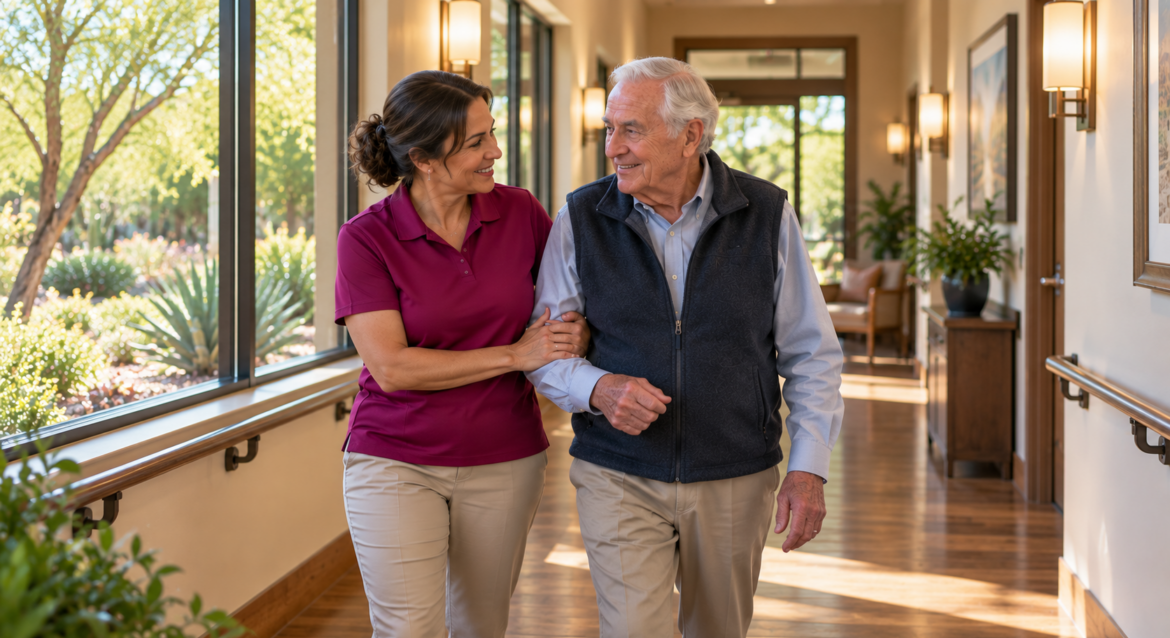
Physical changes, reduced muscle density, and medication side effects can make older adults particularly vulnerable to home accidents and physical trauma. Understanding the 5 most frequent injuries in seniors allows families to proactively modify living spaces, implement safety protocols, and choose care environments designed to mitigate risk while preserving daily independence.
1. Bone Fractures (Hip, Wrist, and Femur)
Fractures represent the most prevalent acute trauma among aging adults, with hip fractures accounting for significant emergency room admissions. As bone density decreases due to age-related osteoporosis, even a minor slip or misstep on a flat surface can result in a severe bone breakage.
- Primary Risk Factors: Sarcopenia (muscle loss), reduced bone mineral density, slippery bathroom tiles, loose rugs, and unassisted transfers.
- Common Consequences: Loss of mobility, lengthy surgical recovery, chronic pain, and reduced confidence during daily movement.
- Prevention Strategy: Installing non-slip flooring, zero-threshold roll-in showers, and strategic grab bars throughout residential spaces.
2. Traumatic Brain Injuries (TBIs) and Head Trauma
Head injuries occur when a senior loses balance, collapses, or hits their head on furniture or hard flooring. According to clinical data from the Centers for Disease Control and Prevention, falls are the leading cause of TBI-related hospitalizations in older adults.
- Primary Risk Factors: Postural hypotension (sudden blood pressure drops upon standing), medication-induced dizziness, and tripping hazards in unlit hallways.
- Common Consequences: Cognitive disorientation, subdural hematoma, altered sleep patterns, and prolonged recovery timelines.
- Prevention Strategy: Continuous 24/7 awake monitoring, motion-sensor night lighting, and immediate caregiver assistance during nighttime transfers.
3. Sprains, Strains, and Joint Dislocations
Ligaments and tendons lose elasticity as adults age, making ankles, wrists, knees, and back muscles highly susceptible to painful strains and dislocations. A sudden attempt to break a fall or lift heavy household items frequently causes severe soft tissue damage.
- Primary Risk Factors: Loss of joint flexibility, improper footwear, and unassisted lifting or reaching for high shelves.
- Common Consequences: Chronic joint inflammation, reduced range of motion, and hesitancy to participate in daily physical activity.
- Prevention Strategy: Low-impact daily mobility exercises, wearing supportive footwear with non-skid soles, and hands-on caregiver assistance with heavy tasks.
4. Skin Tears, Cuts, and Severe Lacerations
Aging skin becomes thin, fragile, and less elastic over time. Minor bumps against door frames, sharp furniture corners, or aggressive adhesive bandages can lead to painful skin tears and deep lacerations.
- Primary Risk Factors: Fragile capillaries, paper-thin skin layer, sharp home hazards, and unmanaged fingernail length.
- Common Consequences: Secondary skin infections, delayed wound healing, and discomfort during daily dressing routines.
- Prevention Strategy: Padded furniture edges, gentle skin hydration protocols, and hands-on caregiver assistance during bathing and dressing routines.
5. Burns and Scalds
Diminished thermal sensitivity, reduced physical reaction times, and cognitive disorientation put seniors at elevated risk for thermal injuries from hot tap water, cooking appliances, or heating pads.
- Primary Risk Factors: Unattended cooking, water heater thermostats set above safe thresholds, and reduced pain sensation in extremities due to neuropathy.
- Common Consequences: Severe skin blistering, deep tissue infections, and emotional distress.
- Prevention Strategy: Anti-scald temperature regulators on faucets, chef-prepared dining that eliminates stove safety hazards, and supervised access to heating devices.
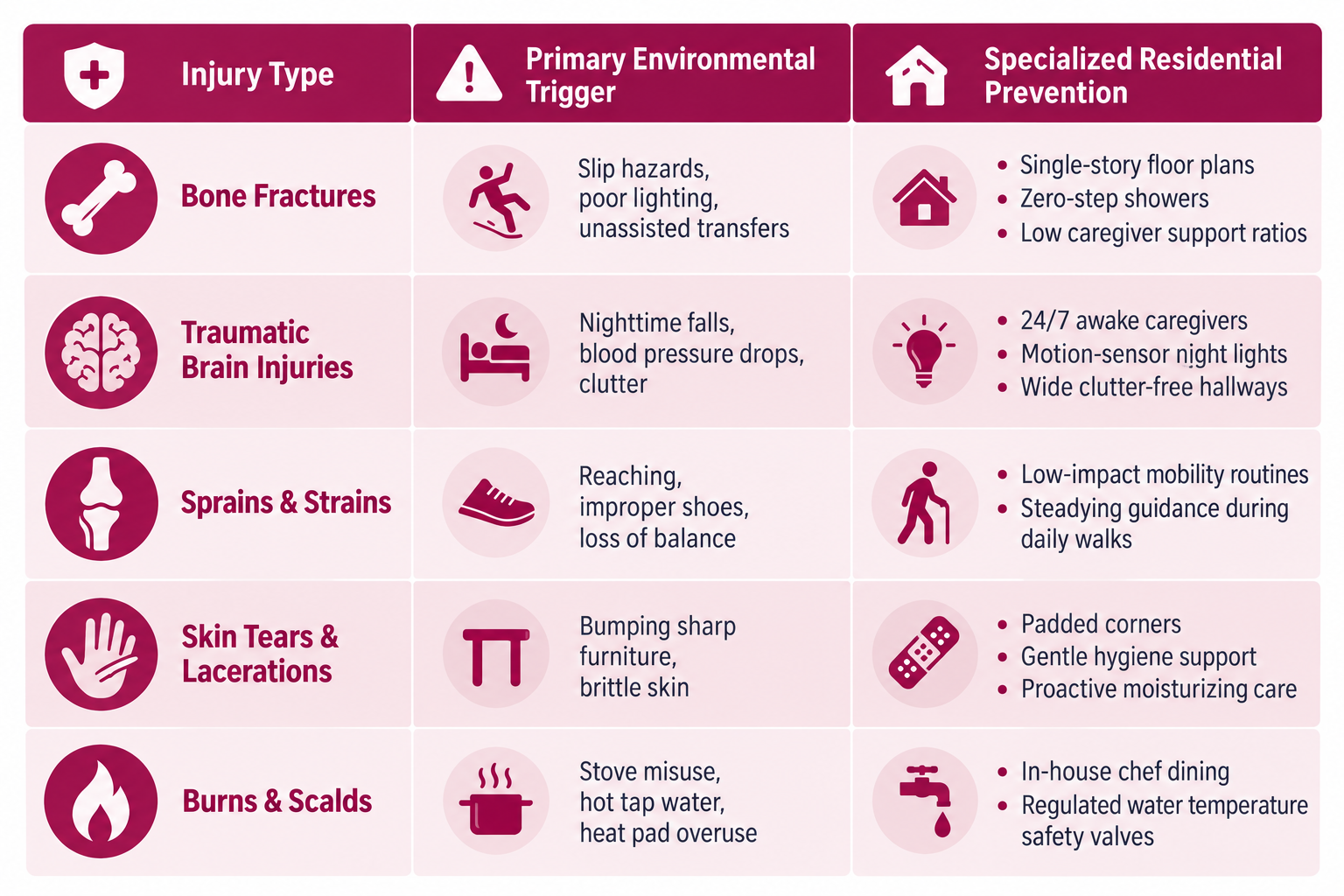
Injury Risk Comparison and Environmental Solutions
Evaluating these hazards side-by-side demonstrates how tailored environmental design mitigates the 5 most frequent injuries in seniors.
How Torbrook’s Boutique Homes Prevent Senior Injuries
At Torbrook Assisted Living, preventing accidents starts with our boutique residential design. When evaluating the 5 most frequent injuries in seniors, proactive environmental design and close supervision make all the difference. Unlike large multi-story institutions with long concrete corridors, our three Scottsdale residential communities feature single-story luxury floor plans tailored specifically for aging safely in place.
Fully licensed by the Arizona Department of Health Services, Torbrook combines a home-like environment with clinical oversight:
- 24/7 Awake Caregivers: Our dedicated staff stay alert through the night, eliminating the delay in response that leads to unassisted midnight fall attempts.
- Boutique Resident Ratios: Low resident-to-caregiver ratios ensure personalized physical support during bathing, mobility, and dressing routines.
- Proactive Micro-Monitoring: Our experienced care team notices subtle shifts in balance or gait early, updating care plans before injuries occur.
- Dual-Licensed Continuity: Residents needing expanding support seamlessly transition between assisted living care and specialized memory care without changing suites.
To learn more about how our luxury homes protect against the 5 most frequent injuries in seniors contact Torbrook Assisted Living today:
- Explore Our Homes: Meet our Team or read our specialized Blogs to see our thoughtfully designed living spaces.
- Tour Our Scottsdale Locations: Contact our office to arrange an in-person visit to evaluate our senior-safe environments.
- Discuss Your Layout Needs: Speak directly with our leadership team about your parent’s care timeline and pet requirements.
- Call our team today or message us through our contact page to learn more about our family-owned assisted living standard in Scottsdale.
See also:
- Safety, Dignity, and Ease: Why Assisted Living is Essential for Physically Challenged Seniors
- Enhancing Quality of Life: The Benefits of Specialized Memory Care
- The Benefits of Personalized Living Spaces in Assisted Living Communities
- When Is the Right Time to Choose Assisted Living for Seniors?
- Why Scottsdale is Ideal for Senior Assisted Living
- The Added Value of Luxury Living in Assisted Living Communities
Author: Torbrook Assisted Living Team