
Articles
Understanding the Care Needs of Seniors in Scottsdale

As adults age, their daily requirements shift from general independence to specialized, multi-dimensional support. Meeting these evolving requirements effectively requires balancing physical safety and hands-on assistance with emotional dignity, personal autonomy, and social connection. For local families evaluating long-term care options, identifying every specific care need of seniors is the most crucial step in ensuring an aging parent receives tailored support that adapts gracefully as their health changes over time.
Physical Safety and Daily Living
Physical changes in older adults often occur gradually, making it essential to adapt living environments and daily support routines before safety risks arise.
Hands-On ADL Assistance
As joint mobility and physical endurance decline, caregivers must address each specific care need of seniors regarding Activities of Daily Living (ADLs). These core personal care tasks include:
- Bathing and Grooming: Safe transfers in and out of showers, hair care, and dental hygiene.
- Dressing and Hygiene: Assistance with fasteners, footwear, and personal grooming to maintain daily pride.
- Mobility Support: Steady guidance during walking or transferring from chairs and beds to reduce fall risks.
Environmental Safety Adaptations
According to safety guidelines published by the National Institute on Aging, modifying living spaces prevents emergency room visits. Ideal physical environments incorporate single-story floor plans, zero-threshold roll-in showers, non-slip flooring surfaces, and discreetly placed wall grab bars that ensure safety without feeling clinical.
Targeted Nutrition and Hydration
Metabolic shifts and medication regimens alter appetite and digestive health in older adults. Seniors require nutrient-dense, freshly prepared meals that accommodate specific medical diets, alongside active hydration tracking throughout the day to prevent fatigue and urinary tract complications.
Cognitive and Neurological Support Needs
Cognitive health requires dedicated attention, particularly for seniors managing mild cognitive impairment, Alzheimer's disease, or progressive forms of dementia.
Professional Medication Oversight
Managing complex, multi-prescription regimens is challenging for aging adults. Professional medication administration by trained staff ensures that prescriptions are taken at exact times, eliminating missed doses, timing errors, or dangerous double-dosing.
Predictable Daily Routines
Seniors experiencing memory loss benefit significantly from consistent schedules. Research highlighted by the Alzheimer's Association confirms that addressing the mental specific care need of seniors through predictable daily rhythms for meals, waking hours, and quiet times reduces anxiety, disorientation, and late-afternoon agitation.
Tailored Cognitive Engagement
Cognitive exercise must be meaningful and tailored to a senior's personal life history. Engaging in music therapy, tactile crafts, gardening, or familiar lifelong hobbies helps stimulate neural pathways and maintain personal self-esteem.
Care Levels Across Every Stage of Aging
Evaluating an aging parent's needs requires looking at the full spectrum of care, from light daily support to continuous supervision.
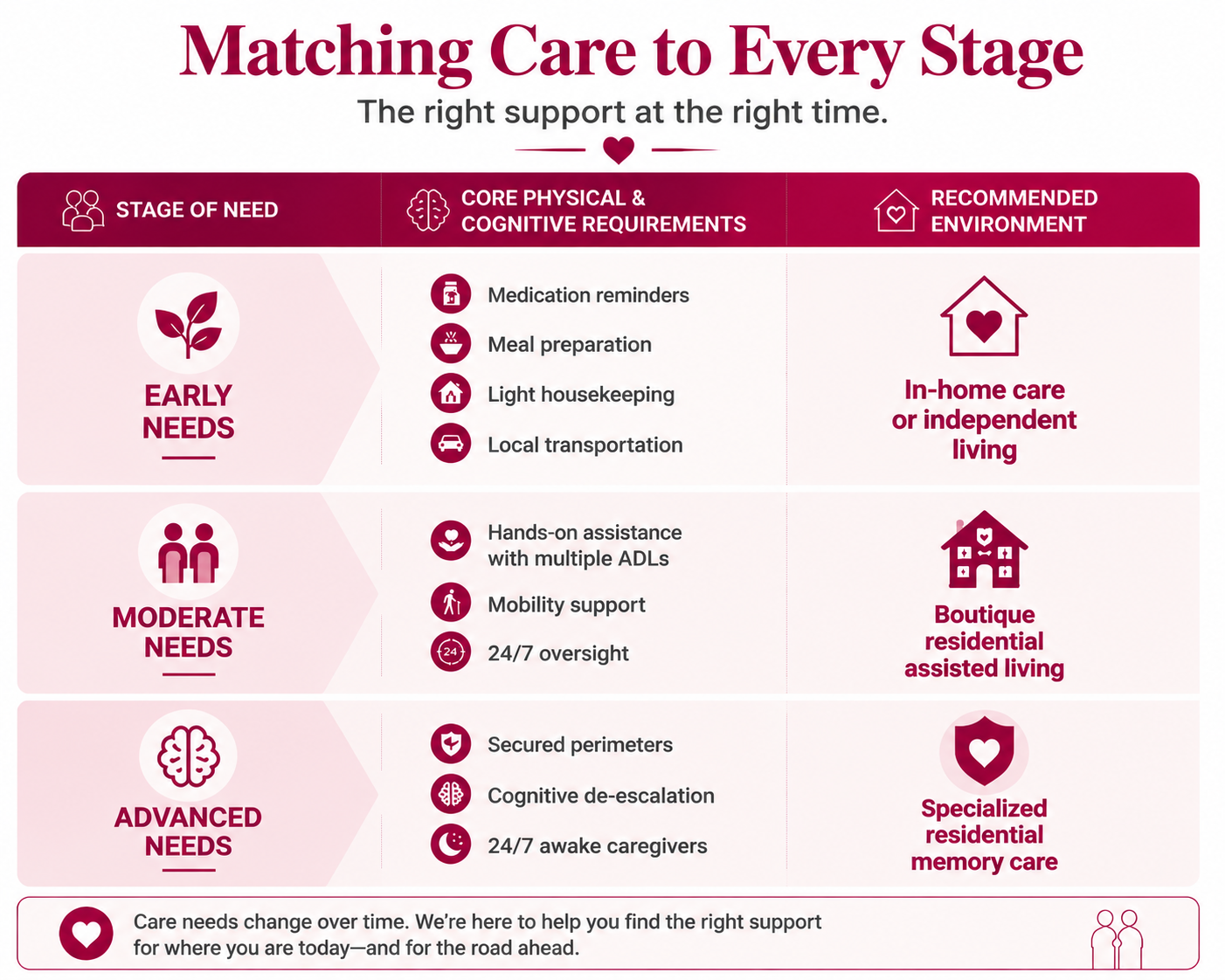
Emotional and Social Well-Being
A complete care approach looks beyond physical tasks to nurture a senior's emotional well-being and sense of identity. When evaluating any specific care need of seniors, emotional security remains paramount.
Combating Senior Isolation
Social isolation is a major risk factor for physical and cognitive decline in older adults. Frequent, low-stress social interactions with peers, shared family-style meals, and meaningful conversations with consistent caregivers restore a strong sense of purpose and emotional security.
Preserving Autonomy and Choice
Seniors thrive when they maintain control over their daily decisions. Encouraging older adults to choose their own wake-up times, select their daily wardrobe, or request favorite childhood recipes preserves their personal dignity and self-worth.
Healthcare Continuity and Proactive Safety
Effective senior care relies on continuous observation to catch subtle health shifts before they become health crises.
Proactive Micro-Monitoring
Long-tenured caregivers who work with the same residents every day recognize minor physical or behavioral changes immediately. A subtle drop in daily appetite, minor balance instability, or a slight shift in mood can indicate an underlying medical issue that requires early attention.
Aging-in-Place Adaptability
When physical or memory needs advance, forcing a senior to relocate to an unfamiliar facility causes severe transitional stress. Choosing a dual-licensed residential home allows seniors to receive expanding care levels in the exact same room, surrounded by familiar faces and established routines.
Comprehensive Care at Torbrook Assisted Living
- At Torbrook Assisted Living, our care model is designed to meet every specific care need of seniors in Scottsdale. Fully licensed by the Arizona Department of Health Services, our three luxury residential communities in Scottsdale offer an intimate, home-like setting where care adapts around the individual.
- With high caregiver-to-resident ratios, dedicated 24/7 awake staff, fresh home-cooked culinary dining, and long-tenured leadership under our experienced care team, we provide the safety seniors require and the warmth they deserve. From light daily assistance to advanced memory care, residents age in place comfortably without ever having to move again.
- To learn more about our care philosophy or review our frequently asked questions, contact Torbrook Assisted Living today at (480) 665-9553 to schedule a private visit.
- Explore Our Homes: Meet our Team or read our specialized Blogs to see our thoughtfully designed living spaces.
- Tour Our Scottsdale Locations: Contact our office to arrange an in-person visit to evaluate our senior-safe environments.
- Discuss Your Layout Needs: Speak directly with our leadership team about your parent’s care timeline and pet requirements.
- Call our team today or message us through our contact page to learn more about our family-owned assisted living standard in Scottsdale.
See also:
- Safety, Dignity, and Ease: Why Assisted Living is Essential for Physically Challenged Seniors
- Enhancing Quality of Life: The Benefits of Specialized Memory Care
- The Benefits of Personalized Living Spaces in Assisted Living Communities
- When Is the Right Time to Choose Assisted Living for Seniors?
- Why Scottsdale is Ideal for Senior Assisted Living
- The Added Value of Luxury Living in Assisted Living Communities
Author: Torbrook Assisted Living Team